





Forty years after she coined “no-makeup makeup” in 1986, Victoria Jackson is bringing the term back. This time, as a standalone brand rather than a philosophy attached to someone else’s line. Jackson, now 71 and, by her own account, in the beauty business for 50 years, built her name on 1980s-era Hollywood makeup artistry before becoming the first person to sell color cosmetics on QVC in 1989. It generated roughly $1 billion in sales over the following decade through infomercials that, at their peak, commanded close to $22 million a year in airtime and drew about 20,000 customers a week.
Jackson then stepped away from beauty for two decades to fund research into neuromyelitis optica (NMO), a rare autoimmune disease her daughter, Ali Guthy, was diagnosed with at 14. “When you’re working at what I call the speed of life, as soon as that diagnosis came, I went from mascara to medicine in a nanosecond,” Jackson said to BeautyMatter. She ran that effort as she’d run a business, building infrastructure and a network from scratch. “I took everything that I had learned in the world of cosmetics,” she said, taking that same philosophy into what became her medical foundation.
Over 20 years, that meant building a blood bank of more than 100,000 samples, funding research across Mali to Moscow, and working with scientists at institutions including the Mayo Clinic and Harvard University. By her account, the foundation’s work led to four approved drugs and roughly 50 short films documenting the effort across more than 45 countries, work for which she says she was recognized by the pope and inducted into the National Women’s Hall of Fame.
What pulled her back to beauty, she said, was a mix of finishing that chapter and missing the color of her old world. “Everything is black, white, gray. I missed all the color,” she said of the medical field. At the same time, she kept encountering the same unmet need she’d built her first career on. That is what led to No Makeup Makeup’s 2024 launch, a return built explicitly on the same hero foundation and education-first playbook she’d developed decades earlier, but run this time as a tightly self-funded, single-founder operation rather than a licensed or investor-backed line.
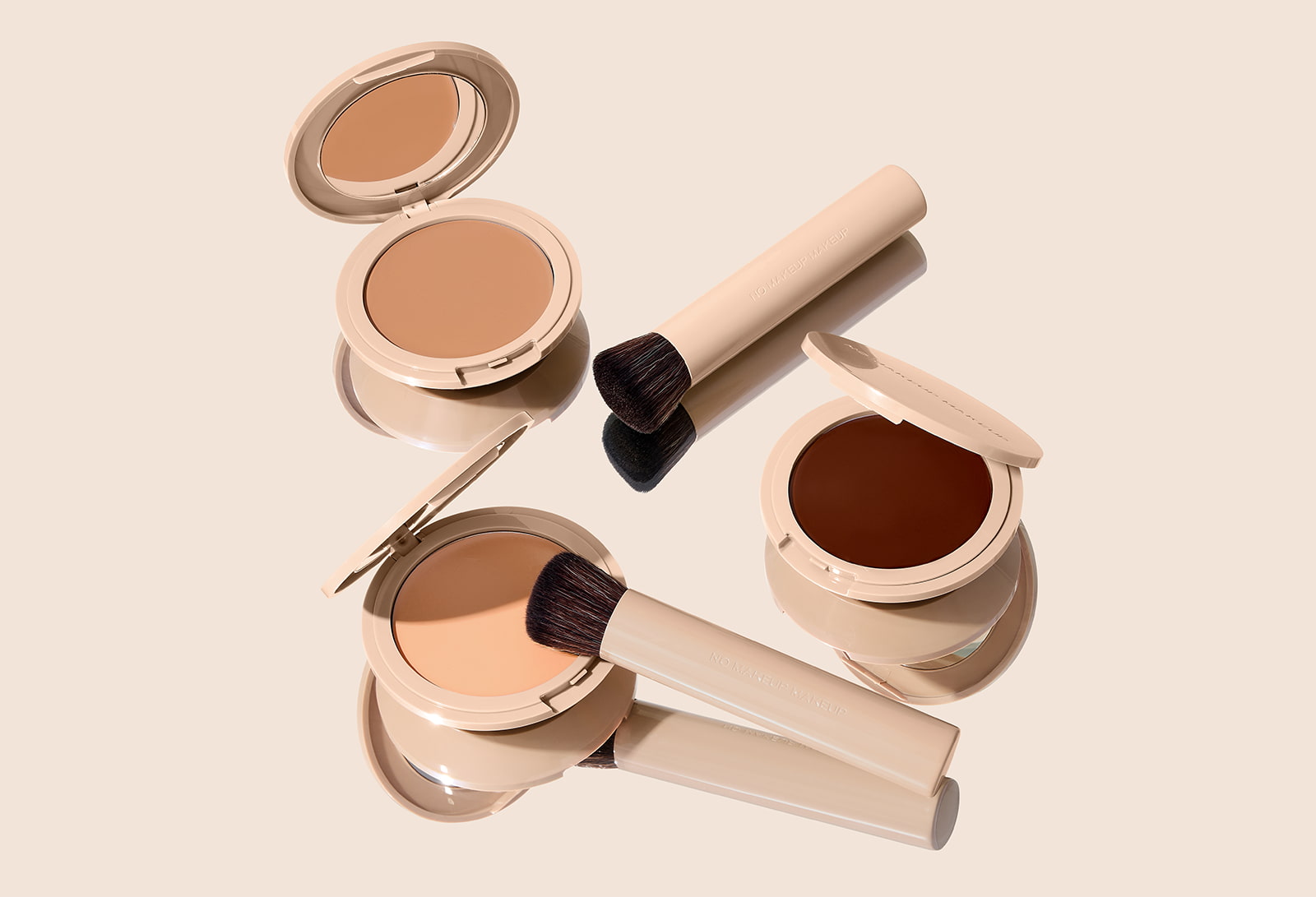
Jackson’s core argument is that “no-makeup makeup” isn’t a trend she follows; it’s a philosophy the market periodically catches up with. “I don’t respond to trends,” she said, “because I pretty much stay true to a philosophy that’s really embedded in my DNA and what I feel.” She pointed to the brand’s foundation as proof of concept. “My foundation is my hero product. What is important to me is that I can make a beautiful foundation that still lets you look like yourself.”
That philosophy extends to shade architecture, where the brand has taken a public stance against the industry’s shade-count arms race. The line ships with thirteen shades, which fractional CMO Alexis Rodriguez Alvich framed to BeautyMatter as a deliberate technology bet rather than a limitation. “Someone might come to the brand and say that’s not inclusive. It is. It’s thirteen shades that rely on innovation as opposed to carrying a lot of inventory. And the technology makes it so that we can adapt to all skin tones,” she said. Jackson echoed the claim directly. “I can shade-match any skin tone to look exactly beautiful.”
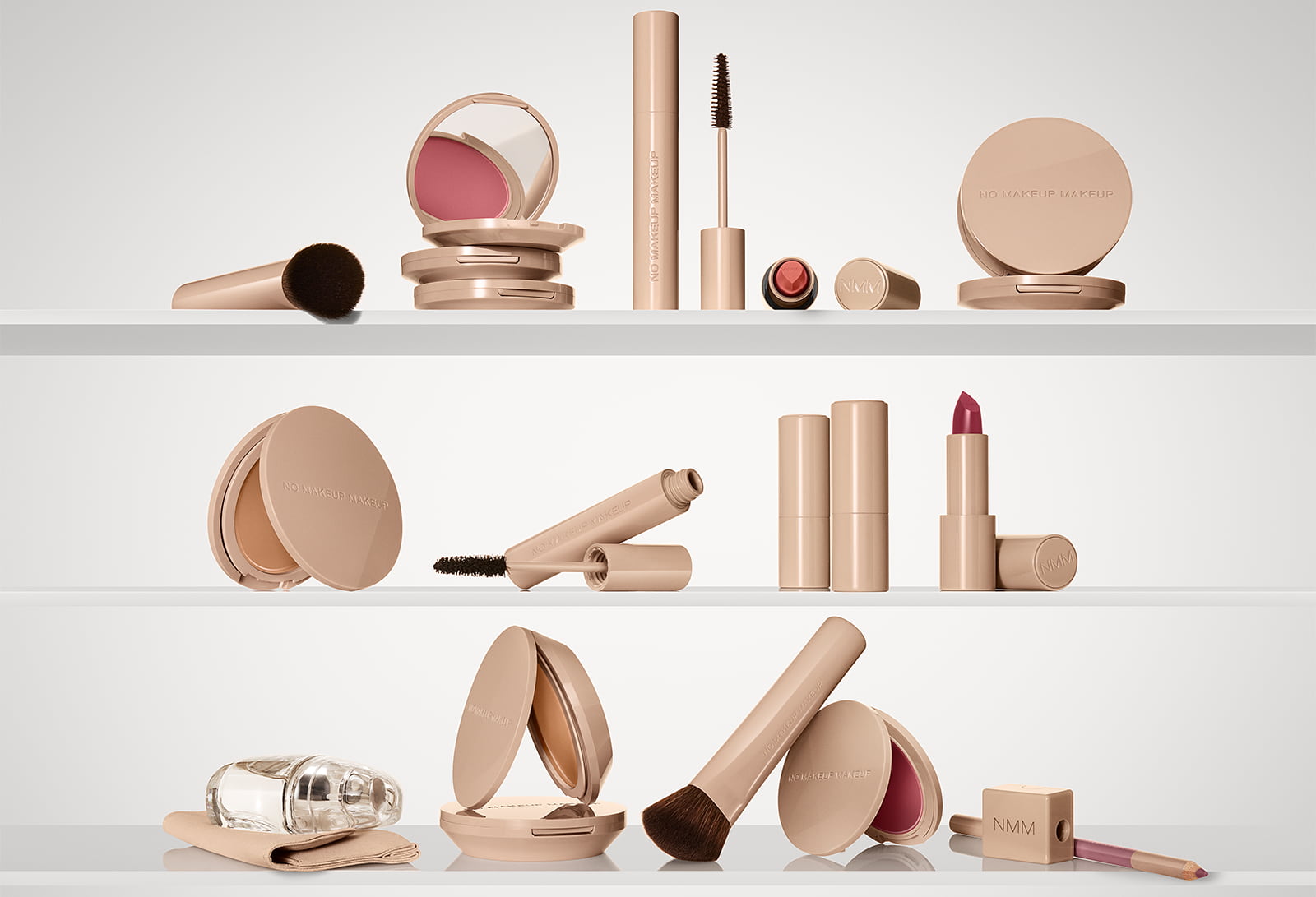
SKU discipline is the other half of the positioning. Jackson, who said she has developed 600-plus SKUs across her career and produced hundreds of catalogs over thirteen years, is running No Makeup Makeup in the opposite direction. “I’m keeping it very tight and curated.” She added that eyeshadow, eye pencil, and brow products are next, with other launches including a mascara, taking roughly two years in development before release. “I’m not rushing to the market and coming out with a lot of products,” she said.
The brand’s clearest commercial validation has come through QVC, where Jackson returned last year after roughly three decades away from the platform. “I came back, and I did over a million dollars in one hour,” she said, adding that certain weekends have produced sales of 73,000 foundations, volumes she noted “would take a long time in a Sephora to do.” Rodriguez Alvich supplied the season-level figures: Seven QVC appearances last year produced seven sellouts and a 94% sell-through rate.
Beyond QVC, the brand runs DTC through its own site, Amazon, and Shopify, with social channels assigned narrow, specific jobs rather than blanket coverage. “Instagram is about brand building and community. TikTok will always be about discovery and acquisition,” Rodriguez Alvich said, noting the brand’s creator program “helped to drive 40% of our revenue last year.” They framed QVC’s demonstration-and-trust dynamic as a live-selling model they hope to replicate elsewhere, including a planned move to YouTube, given Jackson’s on-camera educational strength.
On brick and mortar and wider retail, both Jackson and Rodriguez Alvich described a sequencing choice rather than an aversion. “We do not believe distribution should get ahead of brand awareness or consumer demand,” Rodriguez Alvich said. “We want every new channel to add something to our ecosystem as opposed to just simply adding doors,” she continued. “It’s a notably conservative posture in a beauty landscape where retail doors are typically treated as a growth lever to chase rather than a resource to ration, and it stands in contrast to a beauty M&A and funding environment that logged 27 global transactions in 2025 YTD alone.
No Makeup Makeup is entirely self-funded by Jackson, a choice she ties directly to control. “Because I’m self-funding the brand, I like to be really thoughtful and intentional about every decision,” she said, adding that outside investors—even a retail partner like QVC—might push for product extensions she isn’t ready to greenlight. She credited her years of running a self-funded medical research foundation with reinforcing the model. “I saw the power of self-funding and how amazing it is, and what a gift to be able to do that.”
That said, Jackson does not rule out outside capital. “There’s a freedom that goes with [self-funding], but also of course there’s a heavy lift and a burden when it is all of your money,” she said. “Will I potentially, down the road? I always leave everything open. Maybe the most amazing company or person will come to me and say, ‘Victoria, here’s a little pile of money, and you still can control and run everything,’” she said.
The stance places No Makeup Makeup outside a beauty venture environment, and against a global beauty and personal-care market Statista pegs at $698.38 billion—a market increasingly courting venture and private-equity capital even as Jackson keeps her brand’s cap table to one name. That discipline is already visible in the pipeline. The brand’s most recent release, a mascara, spent roughly two years in development before launch, and according to Rodriguez Alvic, was built around a technology addressing a specific complaint the brand kept hearing from its customer: “[Our] lashes are very brittle and dry and falling out.”
Restraint is the bet the business itself is built on. A founder who has already run the maximalist version of this playbook—600-plus SKUs, hundreds of catalogs, a billion dollars in infomercial sales—can grow just as fast, or faster, by doing less. Whether QVC’s live-selling numbers and a 40%-creator-driven revenue base can scale into new channels without diluting that discipline is the question that will define No Makeup Makeup’s next chapter. For now, Jackson is staying the course she set in 1986. “This is what we do. This is who we are,” she said conclusively.